Description
The required ones by the new performance standards
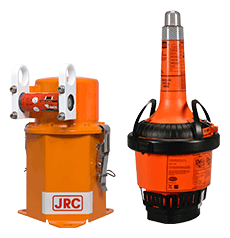
- Equipped with two types of capsule of fixed and float-free type
- Recording of 48 hours in both capsule of fixed and float-free type
- Recording of 30 days/720 hours of recording control unit built-in media
- Image recording of two radars, one ECDIS
- Recording of AIS information
- Audio recording of the minimum 2 ch in main microphone and audio recording of independent minimum 1 ch in the external wing microphone.
- Recording independent of the microphone sound of the VHF call voice
- Recording of the electronic logbook, electronic inclinometer, Thruster and BAMS information*1
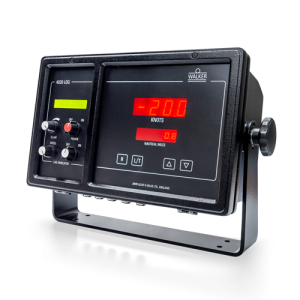
System operation, on a 7-inch display
Newly designed for the JCY-1900 is the 7-inch color LCD touch display which allows full system operation. Displaying various VDR alerts with detailed information, see what sensors are connected including status, view the latest recorded image data of radar and ECDIS and playback of audio tracks recorded from microphones.
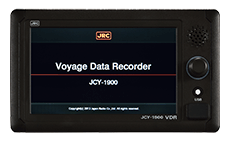
Playback, ideal for crew training
JRC includes intuitive playback-software*2 that incorporates real-time monitoring functionality on the user PC. The data acquired can be displayed in both graphical and numerical format. Standard CSV (Comma Separated Values) data conversion enables easy and efficient exchange of information to shore e.g. via email. In addition, the playback-software is an ideal tool for crew training. Its ease of use and the freedom to survey a range of scenarios enhances the user’s navigation skills.
*2: Playback-software supports Windows XP, Vista, 7, 8, 10.

Remote maintenance, closer to you than ever
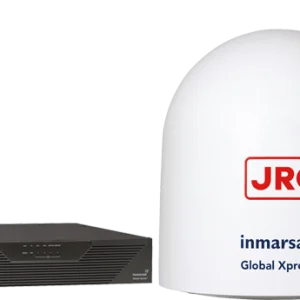
The new JRC VDR has a dedicated server integrated as standard to support our JRC proprietary Remote Maintenance System (RMS) using IP-routing technology to monitor status of navigation and radio communication equipment onboard, via JRC’s FB or GX Inmarsat satellite communications systems, to establish a highly secure connection data link to the vessel. This allows a cost-effective determination of the operating status, software version numbers installed, etc., of the JRC equipment onboard whilst the vessel is at sea. Being able to diagnose a problem remotely, accurately, reliably and quickly, allows the ship owner to save one of the most precious commodities, time. JRC can make preparations at the next port for the necessary repair work, dramatically increasing the return to work status, using our comprehensive and well-trained global support network.
System
No new S-VDR regulation, yet a new model
For Simplified Voyage Data Recorder (S-VDR), there will also be the new JCY-1950*3 variant available with just one capsule, fixed or float free. JRC is a company founded on the principles of long term reliability and customer support and there are many ship owners sailing with older S-VDR makes and models that might no longer be supported. JRC views this as a duty to these owners to continue to offer an acceptable alternative solution*4.
*3: Conforming to the S-VDR performance standards MSC.493(104), which is a revised EPIRB performance standards.
*4: The type of capsule equipped as S-VDR may have limited by classification/Flag State. Please check in advance.
Specifications
| Name | Voyage Data Recorder (VDR) |
|---|---|
| Model | JCY-1900 |
| Operation panel unit | |
| Display | 7-inch WVGA color LCD, 800×480 pixel Built in speaker, Touch + rotate and push button, USB (copying of data) |
| Protective capsule | |
| Recording data | |
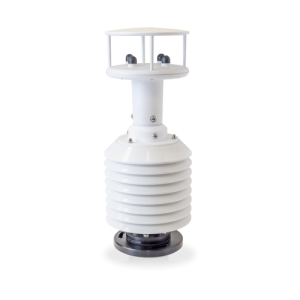
| Sensor data | date & time, ship’s position, speed, heading, echo sounder, main alarms, rudder order and response, engine and thruster order and response, watertight and fire door status, Hull openings status, Accelerations and hull stresses, Wind speed and direction, AIS, Rolling motion, Electronic logbook, BNWAS, speed and distance measuring equipment both ground/water speed |
| Audio data | Microphone, VHF |
| Image data | Radar (X-band/S-band), ECDIS |
| Recording time | Fixed capsule: 48 hours (capacity 32 GB) Float-free capsule: 48 hours (capacity 80 GB) Solid state drive: 720 hours (30 days) (capacity 512 GB) |
| Data recording interval | Sensor data: depends on the input from the sensors (normally 1 second) Audio data: continuous (1 audio file/minutes) Image data: 3 images/15 seconds |
| Input ports for sensor connecting | |
| Serial port | IEC 61162-1 (4800 bps): 22 ports IEC 61162-2 (38400 bps): 2 ports |
| LAN | IEC 61162-450: 24 ports |
| Microphone audio input | 8 ports |
| VHF audio input | 4 ports |
| Radar/ECDIS input | 6 ports |
| Connection I/F | RGB (option) |
| Dry contact | 32 ports (option: NCT-82 dry contact input) 64 ports (option: NCT-83 dry contact input) |
| Analog input | 8 ports (option) |
| Power supply | |
| 100 to 120 VAC (±10 %) 1-phase 50/60 Hz 200 to 240 VAC (±10 %) 1-phase 50/60 Hz | |